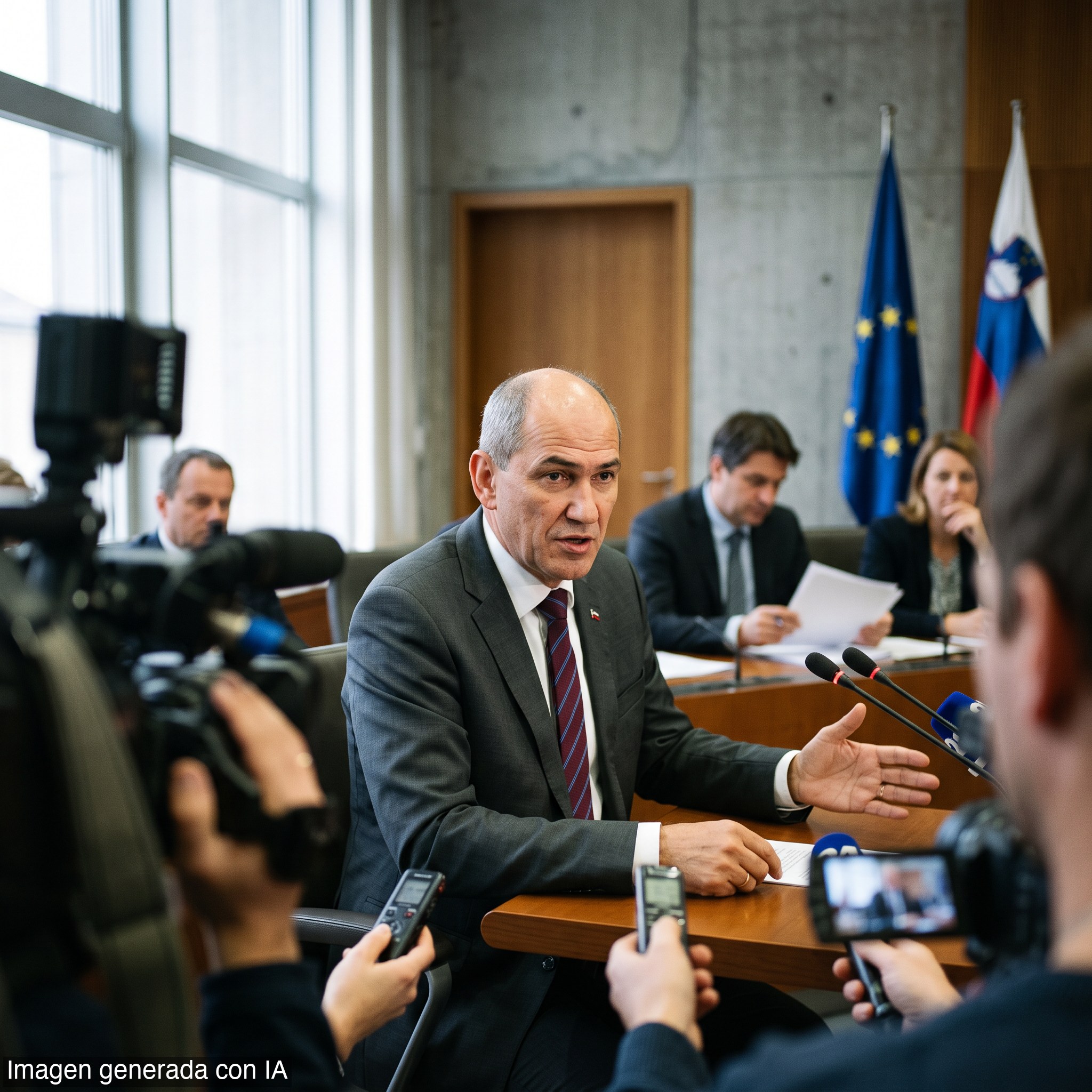
Driving the news: Janez Janša is Slovenia's new prime minister. He built a 51-vote coalition after his opponent, Robert Golob, failed to form a government. Janša's party won 28 seats. Golob's won 29. Janša still got the job.
The big picture: Janša moved fast. He reversed Golob's anti-Israel stance. He announced plans to move Slovenia's embassy to Jerusalem. He froze recognition of a Palestinian state. He revoked a 2025 ban on military trade with Israel.
On the economy, he's promising less government. He wants to cut red tape, support private education and healthcare, reform pensions, and shrink the bureaucracy. He also wants a second reactor at Slovenia's Krško nuclear plant.
On immigration: Janša signed a letter with 18 other EU leaders calling for stricter border controls, more deportations, and a crackdown on human smuggling. He wrote that 'the end is approaching for social tourism, overlooked people smuggling and the importation of voters for the European left.'
Between the lines: Janša is no simple Orbán clone. He traveled to Kyiv in March 2022 alongside Polish and Czech leaders. He supports military aid to Ukraine. He backs sanctions on Russia. That's a meaningful split from Budapest.
The bottom line: Slovenia is small. But the pattern is clear. Voters across Europe are punishing the left for four years of inefficiency and open borders. Janša's playbook — free enterprise, controlled borders, pro-Israel, pro-America — is gaining ground precisely where the progressive project has run out of answers. The administrative state is a slow teacher. Electorates are not.