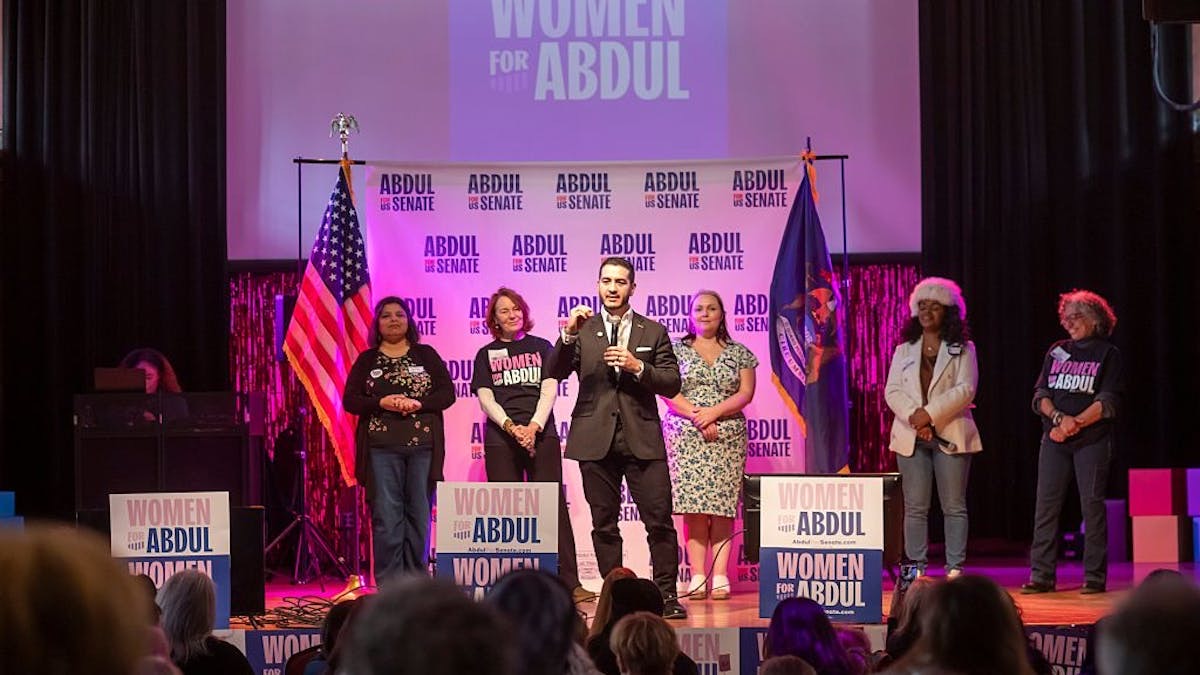
Driving the news: Horace Sheffield III, pastor of New Destiny Christian Fellowship and host of 'The Wake-Up Call' on FaithTalk 101.5 FM, endorsed Michigan Senate candidate Abdul El-Sayed on air and urged listeners to make 'five and ten phone calls' for him ahead of the Aug. 4 Democratic primary against Rep. Haley Stevens.
Campaign finance records show El-Sayed's campaign made 10 payments of $7,500 each to Sheffield's nonprofit, Ecumenical Ministers Alliance — totaling $75,000 between Oct. 21 and June 1, listed as 'political consulting.' The nonprofit is registered to Sheffield's home address.
Between the lines: Sheffield made multiple public endorsements — including a Dec. 6 radio appearance and a June 20 video filmed at El-Sayed's campaign headquarters — without disclosing the payments. El-Sayed called the nonprofit's endorsement a 'deep honor' and featured it on his campaign website.
This isn't the first time. In 2018, Sheffield was suspended from radio station WFDF after endorsing gubernatorial candidate Shri Thanedar while Thanedar's campaign was paying his nonprofit. Sheffield then said, 'I won't be involved in any more campaigns.'
Salem Media, which owns FaithTalk 101.5 FM, issued a statement 'completely rejecting' the El-Sayed endorsement, noting Sheffield purchased airtime independently.
The bottom line: El-Sayed has campaigned loudly against corporate PAC money and in favor of 'authenticity.' His own candidate said it plainly: 'You can't buy authenticity.' The $75,000 paper trail suggests someone tried anyway. Undisclosed pay-for-endorsement arrangements corrode the trust of the very communities these pastors claim to serve — and voters deserve to know who is funding the voices in their ears.